

- Excerpt
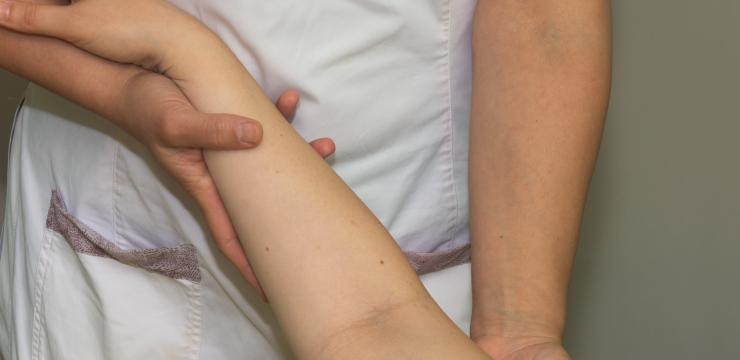
In 2024, an estimated 2.4 million women were diagnosed with breast cancer worldwide. Standard treatment includes surgery to remove the breast tumor, radiation therapy to reduce recurrence risk in the breast and surrounding tissues, and chemotherapy. Up to 40% of the women treated for breast cancer develop lymphedema (swollen upper limb) as a result of these interventions. Women treated for breast cancer often report being unaware of the fact that lymphedema is a common side effect of conventional cancer treatment and that quite often health care professionals are not well informed and unhelpful in guiding them on how to manage this debilitating condition. On top of that, the problem is that customary management of lymphedema tends to remains unsuccessful in most patients. Is there an alternative approach ?
Table of contents
The challenges of managing lymhedema
Breast cancer-related lymphedema results from regular treatment-induced obstruction or disruption of the lymphatic system that leads from the lymph node in the armpit to the hand and backwards. Personal factors, such as obesity or higher body mass index (BMI) and infection or trauma can increase the risk of lymphedema. Management of lymphedema remains a major challenge for patients and health care professionals. Routine check-ups for lymphedema management, long-term physical therapy, application of management equipment (compression garments, bandages, special lotions), and repeated cellulitis, infections, and inflammation of the lymph vessels create physical and emotional burdens to patients. Breast cancer survivors with lymphedema spend more days annually either hospitalized or visiting physicians’ offices; they also have more days absent from work, which could adversely affect employment. [I]
Could Masquelier's OPCs offer a solution ?
In the 1970s, during the early years of the clinical research that took place in France to investigate the benefits of the OPCs developed by Prof. Jack Masquelier, their efficacy was demonstrated particularly on function of the capillaries, increasing capillary resistance while decreasing capillary hyperpermeability. It was shown that this effect is the result of the affinity of OPCs for the fibrous proteins elastin and collagen that form the structure of the capillary. Right away, OPCs became the remedy of choice in phlebological and vascular practice. Over time, OPCs' growing popularity in dealing with vascular health led to the idea that this botanical extract might be helpful in supporting the lymphatic system. And so it happened that under the supervision of medical specialist Dr. Alain Pecking a research team of the Centre Huguenin in the Paris suburb of Saint-Cloud decided to find out whether OPCs can stimulate the lymphatic system and to evaluate their effectiveness as a medical treatment of lymphedema.
The study's set-up and protocol
In 1989, in the French medical journal Arteries and Veins ("Artères et veines") doctor Pecking and his colleagues described their study in an article titled Oligomeric Proanthocyanidins: a medical alternative in the treatment of lymphedema ("Oligomères procyanidoliques: une alternative medicale dans le traitement du lymphoedème"). Sixty-three women with unilateral lymphedema in the arm following radiosurgical treatment for breast cancer were included in a placebo-controlled clinical trial. Each patient received, as monotherapy, either a daily dose of 300 mg of OPCs or the equivalent in placebo tablets. To be included in the study, patients had to have limb edema with a sensation of heaviness and discomfort related to skin tension. A minimum of 2 cm of excess limb circumference compared to the opposite arm was required. The duration of the edema had to be at least 18 months. Patients who had previously received treatment to reduce edema (adapted physiotherapy, compression therapy) or treatment with venotonic drugs were excluded from the trial.
The criteria
A complete clinical examination was performed before the start of treatment and then at 1, 3, and 6 months after the beginning of the trial. This examination was based on the determination of the applicable clinical score, which entailed 5 criteria: difference in circumference; tension; mobility; pain; and paresthesia (sensation of the skin that may feel like numbness, tingling, pricking, chilling, or burning). In addition to this, the total volume of the arm was assessed by computer using stepwise measurements of circumferences every 5 cm. These examinations were performed at each consultation, while a functional lymph-flow test was carried out at the beginning and end of treatment. [ii]
Clinical Efficacy
The beneficial change in the overall functional disorder score, combining the 5 criteria (pain, tension, mobility, paresthesia, and difference in perimeter), was found to be significantly greater in the OPCs group. This difference was distinctly measurable from the first month in the OPCs group and increased with the duration of treatment. Four out of five items showed a significant change compared to that observed in the placebo group.
- Tension: Before treatment, the sensation of tension was high in both therapeutic groups. Its improvement was clearly evident in the OPCs group from the 3rd month and continued to increase until the 6th month.
- Mobility: This symptom was also elevated at the start of the study in both groups. It improved in the OPCs group in 62% of patients compared to 15% in the placebo group, with a significant difference as early as the first month and further increased by the sixth month.
- Pain: This complaint, common in 76% of patients, disappeared with a significant difference in 44% of subjects receiving OPCs compared to 24% in the placebo group.
- Paresthesia: Few patients complained of paresthesia at baseline. However, a more detailed analysis revealed a significantly reduction of this symptom in the OPCs group.
- Circumference: The difference in circumference between the healthy and affected arms was not significantly improved during the trial. This parameter remained stable in the grid system used, with the difference in circumference between the healthy and affected sides varying by less than 2 cm.
- Evolution of the total volume of the arm: During the trial, the volume of the affected arm varied between inclusion and the final assessment, increasing in the placebo group, while decreasing in the OPCs group. This difference, although small, was statistically significant in favor of Masquelier's OPCs.
With regard to lymph-flow, the tests showed improvement in circulation velocity in the OPCs group. This result confirmed the outcome of an earlier study in which the effect of Masquelier's OPCs on lymph-flow was measured in a group of healthy subjects.
Consistent results in more severe cases
To appreciate the effect of OPCs in relation to the severity of the initial lymphatic pathology, a further analysis was performed on the group of patients with the most severe forms of breast cancer, such as lymph node metastases, purely lymphatic disruption, necessitating mastectomy (breast removal) with lymph node removal. The results obtained were comparable to those of the overall study population, with clinical and lymph-flow signs improving more significantly in the OPCs group. This favorable outcome in this more severely affected group further supports the efficacy of Masquelier's OPCs in the management of lymphedema.
Comments and conclusion
Medical treatment without associated physical therapy is not standard practice for lymphedema. Despite this, the Pecking team chose to use only medical treatment (monotherapy) on fully informed patients with low-volume lymphedema to precisely evaluate the actual effect of OPCs on lymphedema. They found that no less than 85% of patients experienced an improvement in their condition, with a marked reduction in signs related to edema and fibrosis, and less discomfort already within the first 4 weeks of treatment. This improvement in subjective symptoms was permanent at the 6-month follow-up in 78% of the patients who had taken OPCs, compared to only 21% in the placebo group. Regarding the effect of the placebo, this was a transient improvement suggesting an effect that diminishes and disappears over time. This placebo effect is commonly found in trials testing veno- or lymphotropic drugs and has even been demonstrated in healthy subjects. To be sure, in light of the postive effects observed in the OPCs group in this clinical trial, doctor Pecking and his colleagues recommended that this medical treatment for lymphedema should be administered for at least 6 months to be clearly noticeable and have a lasting effect.
+ + + + + + + + +
[I] Breast cancer-related lymphedema: Symptoms, diagnosis, risk reduction, and management; Mei R Fu; World Journal Clinical Oncology; 2014 Aug 10,
[ii]Oligomeres procyanidoliques: une alternative medicale dans le traitement du lymphoedème; A Pecking, JP Dcsprez-Curely. G Megret, M Delaby; Artères et veines, 8, 302-307, 1989.


