
- Excerpt
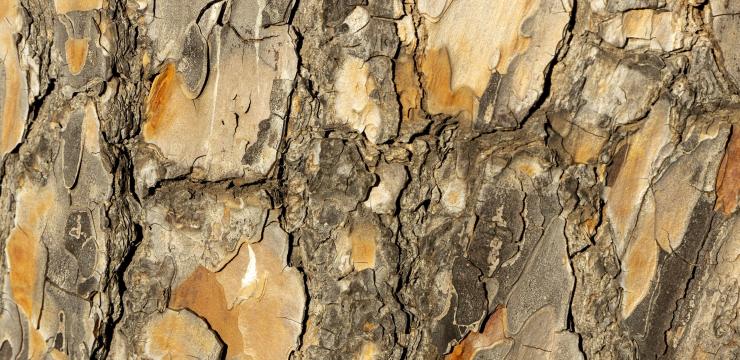
In the late 1940s, during the early days of his research in the field of botanical extracts, Jack Masquelier discovered how to isolate oligomeric proanthocyanidins (OPCs) from the skins of peanuts. His inventions led to a herbal remedy called Resivit. The OPCs embodied in Resivit were extracted from the skins of peanuts that were delivered from Senegal to the oil mills in Bordeaux where they were shelled and skinned. This practice changed shortly before 1950 when Senegal no longer exported to France the whole peanuts but only shelled and skinned ones. So, another vegetal source for producing OPCs had to be found. Masquelier discovered an alternative plant material through a combination of work, intuition and good luck when, one day, he happened to pick up a piece of bark from the Maritime Pine (Pinus maritima). He was struck by the fact that it was dark brown-red on the outside but light brown-yellow on the inside.
Table of contents
The peanut and the pine tree
The piece of pine bark that he held in his hand reminded him of the peanut skin. It, too, is brown-red on the outside and light yellow on the inside. In the peanut, the bioactive part containing the OPCs is located in the inner lining of the “wrapping,” where the skin is in contact with the nut. Masquelier’s line of reasoning was as follows. In the peanut, OPCs are located at the inner part of the skin, probably because this is the best place for the OPCs to protect the oils in the nut against turning rancid under the influence of oxygen. OPCs form an antioxidative sheath. In the pine tree, so it seemed to Masquelier, a similar bioactive substance might very well be located in the inner lining of the bark, protecting the stem and especially the fluids that flow through it.
Extracting OPCs from pine bark
Masquelier was right. The bark did contain OPCs. Moreover, he found that extracting OPCs from the bark of the French Maritime Pine tree instead of from peanut skins had the great advantage that this plant material was abundantly available in the Les Landes region southwest of Bordeaux. There, the Maritime Pine forests extend over an area of 2.5 million acres. Over the years, the earliest production method was successively improved by Masquelier and his colleagues. Eventually, during the 1960s, Masquelier developed, tested and patented the most efficient process of producing a Pine bark extract that was sufficiently rich in OPCs. On December 27, 1965, Masquelier was granted Fench Patent 1.427.100 describing this method of producing Masquelier's French Maritime Pine bark extract. Until this very day, OPCs are being made from the Landes pine bark.
The key findings
While he had been busy to steadily improve the pine bark extract's method of production, Masquelier and his scientific colleagues had also delved deeper into the structure and composition of OPCs. They established that the extract comprised a single substance called catechin as well as a consecutive series of complex clusters of catechins in degrees of condensation ranging from two to tens of catechin units called proanthocyanidins. In fact, this condensation process is the natural life cycle of the proanthocyanidins. Gradually, taking on one new unit at the time, they neatly condense into thicker and thicker clusters. Already in 1948, Masquelier had discovered and described how this bonding or polymerization takes place. But the key in his work is that in his 1965 patent Masquelier explained how his improved production method could separate the slightly condensed and bioactive Oligomers of ProCyanidins from the thicker anti-nutritional forms called 'tannins'. In that seminal French patent, Masquelier defined for the first time the biologically active OPCs as clusters of two to no more than five units.
The Flavan product and its health claims
On March 12, 1965, Masquelier was also granted a patent in which he described numerous vasoprotective effects of his French Pine bark extract, which, for the occasion, he had baptized 'Flavan'. This was also the name chosen for the herbal remedy that would be introduced in France in 1968 in the form of tablets each containing 20 mg of OPCs. In this patent, Masquelier listed an impressive range of conditions that may be alleviated by the intake of Flavan:
- Capillary fragility
- Tendency to ecchymosis (hematoma or “blue spots” occurring spontaneously or after bruising or sports injuries)
- Vascular problems in those with high blood pressure
- Diabetic retinopathy (eyesight problems due to impaired circulation of the retina in diabetics)
- Capillary fragility caused by renal insufficiency, hepatic insufficiency, or infectious diseases
- Abnormally high capillary permeability
- Swollen legs, “heavy legs”
- Varicose conditions, varicose ulcers
- Sequels of phlebitis (vein inflammation)
- Edema caused by hepatic insufficiency
- Pleurisy (inflammation of the membranes surrounding the lungs)
- Periarthritis
- Allergic reactions (urticaria, eczema, Quincke’s edema, dishidrosis)
- Dermatoses (pemphigus – “water blisters”, psoriasis)
- Cellulitis
All these indications were based on the fact that OPCs have a stabilizing effect on the permeability of the capillaries, the microvascular part of the vascular system, where exchange of fluids and solids between the blood and the tissues takes place. For this reason, Masquelier gave his pine bark OPCs a firm place in the history of "vitamin P", the "Permeability vitamin".
The clinical tests
Although the claimed benefits were the result of some 15 years of research, experience and growing knowledge about the physiological effects of OPCs, they needed to be confirmed by observations in a clinical setting as a condition for the admission of Flavan as a herbal remedy on the French market. The clinical tests that were undertaken concerned most of the vascular applications claimed in Masquelier's Flavan patent. One of the researchers, Professor Pierre Sourreil, who had been prescribing Flavan to patients he had treated in his dermatology and phlebology practice, arrived at the following conclusion:
“No intolerance was recorded, irrespective of the treatment period.
We are pleased to note:
- The rapid disappearance of painful symptoms
- The regression or arrest in the development of lesions
When Flavan was used in association with other therapies in patients presenting essential varices [...], and in postphlebitic disease, the drug performed a valuable adjuvant [helpful] function in:
- Painful phenomena
- The resorption of edema and inflammatory phenomena
- Improvements in the quality of sclerosis (hardening caused by inflammation)
In our opinion, Flavan is a vitamin P active product of particular benefit and efficacy for disorders of capillary resistance and permeability.”
Eye health
Tests with Flavan were also performed by ophthalmologists with patients suffering from conjunctivitis, macular degeneration, diabetic retinopathy and lesions in the eye. The lead-researcher, Dr. Edouard Bessiere, concluded that the intake of Flavan “appears especially effective when the lesion is moderate and if prolonged treatment can be prescribed. We must stress the favorable effect of Flavan in conditions of doubtful prognosis in spite of conventional therapy. In particular, the comparison with other vitamin P factors hitherto used is very much in the product’s favor.” [...] “In addition to certain beneficial physiological properties currently under study (... visual acuity curve in low luminosity), we consider Flavan, of all the vitamin factors currently available, to have the most intense and reliable action on disorders affecting capillary resistance and permeability.”
That curious piece of pine bark
As shown in this brief history of the birth and early years of French Maritime Pine bark extract, Jack Masquelier played a pivotal role in its creation, research and development. It set the stage for the worldwide "OPCs" market, years before he developed a method to extract OPCs from Vitis vinifera (grape) seeds. Intially launched as herbal remedies in France, both extracts rose to fame as the bioactive principles in dietary supplements, often containing a combination of both. But, let's not forget that everything began when Masquelier happened to pick up a piece of pine bark.


