

- Excerpt
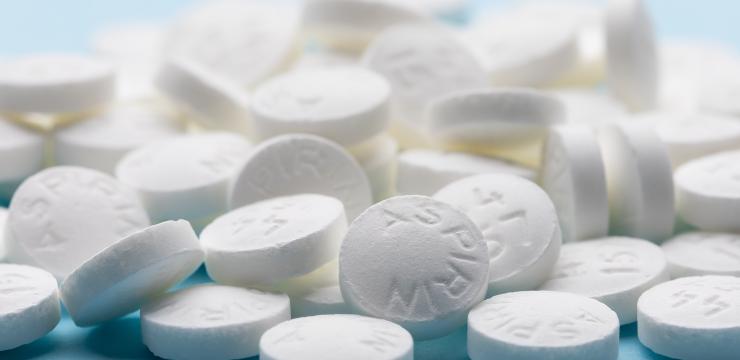
Colorectal cancer (CRC) is the third most commonly diagnosed malignancy with more than 1.9 million annual diagnoses worldwide and the second leading cause of cancer mortality, responsible for more than 900,000 deaths. In the search for chemo-protective drugs that might decrease the incidence and mortality of CRC, research teams around the world suggest that the well known pain-killer Aspirin® (acetylsalicylic acid / ASA) is perhaps the most promising substance. Numerous clinical studies produced considerable evidence demonstrating that long term use of ASA produces positive outcomes in the prevention and treatment of CRC. [I] That's good news, but please note that ASA's beneficial effect does not occur in all types of CRC and that it must be understood as helpful in decreasing the risk of developing CRC and succumbing to the effects of the disease. Moreover, long term use of ASA increases the risk of gastro-intestinal bleeding.
ASA induces "cell-state-reversal"
Most "standard of care" chemotherapeutics and radiation aim at killing and eliminating the cancer cells. Interestingly, ASA doesn't kill cancer cells but induces restoration of the cells' normal state. In other words, ASA supports the cells' homeostasis, which is the dynamic and constantly active interplay of numerous modes of action that work towards the establishment and maintenance of optimum cellular structure and function. In a recently published article, researchers at Tahoe Therapeutics [ii] described homeostasis as "cell-state reversal". Their work concerns discovering the capacity of drugs to support homeostasis in restoring normal cell states. "Many diseases," so they write, "are, at their core, diseases of cell state. A cell that should be quiescent is proliferating. A cell that should differentiate is stuck. A cell that should signal to its neighbors has gone silent, or is shouting the wrong message." [iii]
Normalizing genetic expression
Tahoe explains the cell's homeostasis in terms of genetic expression. Meaning that your genes (your DNA or genetic "make-up") regulate the cell's state by making duplicates of themselves to so "transcribe" the information stored in them on the duplicates that thus serve as DNA's messengers. This messenger RNA (mRNA), which is called "transcriptome", then "encodes" proteins that go to work to orchestrate the innumerable processes that take place in the cell and eventually in the entire organism. This way of describing homeostasis, says Tahoe, "suggests a powerful and underexplored way to evaluate drugs. Rather than asking only whether a compound kills a diseased cell or inhibits a specific target, we can ask a more fundamental question: Does this drug shift the cell’s transcriptomic identity back toward normal?"
Scoring drugs by measuring cell-state-reversal
Tahoe's gene-expression screening technique, which is named "100M" because its data base consists of a 100 million cells, 60.000 experiments, hundreds of compounds profiled across well defined cancer models, uses the principle of cell-state reversal to measure the effectivity of a therapeutic compound. "If you can measure what makes a diseased cell different from its healthy counterpart at the level of gene expression, and you can measure what a drug does to that same cell’s transcriptome [the messenger RNA system], then you can score every drug by how effectively it closes the gap. A drug that reverses the disease signature (pushing expression back toward the healthy reference) is, in a precise and measurable sense, restoring the cell toward its normal state." When applied in the field of screening cancer drugs, this approach overcomes the dominant one which focuses on the effect of the drug on just one or a limited number of observable physical or biochemical characteristics of the cell, which, when blocked or changed, will lead to the cell's death.
Enhancing clinical results
Mainstream chemotherapy research tends to "miss" how cells develop to perform specific tasks, rebalance their metabolism or restore their internal signaling architecture. Moreover, most chemotherapeutics are "non-specific" in the sense that they also target healthy cells, which is why they produce serious side-efects. To the contrary, drugs that can beneficially influence a much greater variety of a cell's homeostatic aspects may not necessarily "kill cells in a dish", but they "might reshape the disease in a patient". Cell-state reversal encompasses the totality of the cell's homeostatic "drivers" and thus offers a complementary lens. "Instead of asking 'does this drug kill the cell?", Tahoe asks: "does this drug make the cell’s gene expression look less like a tumor and more like normal tissue?" This reframing opens the door to capture "the full spectrum of cancer hallmarks" and may ultimately enhance clinical results.
Salicylic acid does the trick
Testing a number of routinely prescribed chemotherapeutics in cases of colectoral cancer (CRC), Tahoe researchers found that "perhaps the most intriguing signal comes from sodium salicylate", which is the sodium salt of salicylic acid. Aspirin® is a combination of salicylic acid and an acetyl group. In light of the fact that all the clinical CRC-trials were performed with Aspirin® (acetyl + salicylic-acid / ASA), this means that it is the salicylic part, not the acetyl group, of ASA that does the trick in dealing with CRC. "In Tahoe 100M, [...], salicylate and salicylic acid produce stronger cancer signature reversal than aspirin itself." This helps us understand that Aspirin's® additional acetyl group is what enables the specific inhibition of the enzyme (cyclooxygenase / COX) which the driver of the cascade of molecular events that eventually produce fever, pain and inflammation. The stronger signal produced by the salicylic acid signal suggests that a COX-independent mechanism is driving the cell-state-reversal. This doesn't mean that ASA is less effective than salicylic acid alone, but it explains which part of Aspirin® supports homeostasis in cancer cells.
Adverse events in long-term use of Aspirin®
At this point, you may wonder: "What does this have to do with Masquelier's OPCs?". Well, here's the problem. Long term use of Aspirin® may lead to gastric ulcers and gastrointestinal bleeding. This is a well known risk of ASA use. In a recent ASA-CRC study published in the New England Journal of Medicine, the Swedish ALASCCA study group confirmed the potential of ASA in CRC treatment, but also reported that "nonsevere adverse events of any cause occurred in 43.4% of patients who received aspirin vs 35.4% of those who received placebo. Severe adverse events occurred in 16.8% of aspirin recipients vs 11.6% of placebo recipients; the most common in both groups were gastrointestinal disorders (6.5% vs 3.9%) and cardiovascular disorders (5.8% vs 4.2%)." [iv] This brings Masquelier's OPCs into play, because it has been known for many decades that they mitigate the adverse effects of Aspirin®.
Aspirin® and Masquelier's OPCs
ASA's side effects stem from the fact that it increases fragility of the capillaries and thus may cause bleedings (hemorrhages). This is why it is considered to be "capillaro-toxic". On the other hand, Masquelier's OPCs are capillaro-friendly because they effectively support microvascular homeostasis. In fact, if you want to prove that Masquelier's OPCs restore and normalize the capillaries' permeability, you can make use of Aspirin's® adverse effect on the microvasculature. Give one group of people Aspirin® & OPCs and another group Aspirin® & inert placebo and see what happens.
The Dubos study
This is precisely what a French team of doctors, working at University Medical Center in Grenoble (France), did quite some years ago. They found that Masquelier’s OPCs were capable of completely re-establishing a normal capillary resistance in elderly patients whose capillary resistance had been significantly weakened by taking 1000 mg of Aspirin® per day for a period of 2 weeks. Following this period, the control group continued taking an inert placebo & Aspirin® while the test-group continued taking Masquelier’s OPCs & Aspirin® during a period of 30 days. In the Aspirin® & OPCs-group, capillary permeability was significantly normalized in 12 out of 15 patients. In the Aspirin® & placebo group the capillary resistance remained abnormally low in 13 out of 15 patients. [v] The conclusion is obvious. Doctors and patients who seek to enjoy the potential of ASA in cell-state-reversal in the prevention and treatment of cancer must combine it with Masquelier's OPCs to reduce the risk of cardiovascular disorders.
+ + + + + + + + +
[I] Salicylate induces AMPK and inhibits c-MYC to activate a NRF2/ARE/miR-34a/b/c cascade resulting in suppression of colorectal cancer metastasis; Chunfeng Liu, Matjaz Rokavec, Zekai Huang, Heiko Hermeking; Cell Death & Disease; 2023 Oct 28;14(10):707. doi: 10.1038/s41419-023-06226-9
[ii] Tahoe Therapeutics; San Fransisco / California
[iii] Reversal as a Drug Discovery Strategy: The Search for Perturbations That Restore Normal Cell States; Using Tahoe 100M to prioritize drugs by their ability to reverse the cancer cell state; Tahoe Therapeutics; 11 February 2026;
[iv] Low-Dose Aspirin for PI3K-Altered Localized Colorectal Cancer; Anna Martling, M.D., Ph.D., Ida Hed Myrberg, M.Sc., Mef Nilbert, M.D., Ph.D., Henrik Grönberg, M.D., Ph.D., Fredrik Granath, Ph.D., Martin Eklund, Ph.D., Tom Öresland, M.D., Ph.D., +12 , for the ALASCCA Study Group; Published September 17, 2025 in N Engl J Med 2025;393:1051-1064; DOI: 10.1056/NEJMoa2504650. Copyright © 2025
[v] Evolution de la résistance capillaire, spontanément ou artificiellement diminuée par l’action d’une substance capillaro-toxique chez des personnes âgées; G. Dubos, G. Durst et R. Hugomot; La Revue de Gériatrie; Septembre 1980. Information Thérapeutique.


